
Your AC system communicates problems through symptoms long before it completely fails. Understanding what those symptoms mean helps you describe the problem accurately to a technician, avoid unnecessary repairs, and know when a problem is urgent versus when it can wait for a scheduled service visit.
Warm Air From the Vents
This is the most common AC complaint, and it can mean several different things:
Dirty air filter. The simplest and most common cause. A clogged filter restricts airflow across the evaporator coil, causing it to freeze and then melt into warm, wet air. Check your filter first — in Tampa Bay, change it every 30-60 days during peak cooling season.
Low refrigerant. If the refrigerant level is too low, the evaporator coil can't absorb enough heat from your home's air. This usually indicates a leak that needs to be found and repaired — simply recharging the system without fixing the leak is a temporary fix that will need repeating. Refrigerant leaks in Tampa Bay homes are often caused by corrosion from salt air on the outdoor coil.
Faulty compressor. The compressor is the heart of your AC system — it pressurizes and circulates refrigerant. If it fails, you get warm air and no amount of troubleshooting will fix it. Compressor failure is more common in systems older than 10-12 years, and at that point replacement is usually more economical than repair.
Blocked or closed supply registers. If too many registers are closed (especially more than 20% of total registers), airflow is restricted and the system can't cool properly. Don't close registers in rooms you're not using — it doesn't save energy and it can damage your system.
Frozen Evaporator Coil
A frozen coil presents as ice on the copper lines going into your indoor unit or, in severe cases, ice building up inside the air handler. When the ice melts, you get water leaks and warm air.
Causes:
- Restricted airflow (dirty filter, blocked return grille, failing blower motor) — this is the #1 cause
- Low refrigerant — causes the coil temperature to drop below freezing
- Running the system with the door or open window — introduces warm, humid air that overwhelms the system
If your coil is frozen:
- Turn the system off at the thermostat. Set the fan to "ON" to help the ice melt.
- Replace the air filter if it's dirty.
- Wait 4-6 hours for complete thawing.
- Call a technician to check refrigerant levels and identify the root cause.
Running the system with a frozen coil will damage the compressor. Turn it off immediately.
Strange Noises
Not all noises are equal. Some indicate minor issues; others signal serious problems:
Bubbling or hissing. Usually refrigerant leak. Call a technician soon — continued operation with a leak can damage the compressor.
Squealing or screeching. Typically a failing blower motor bearing or a belt issue (in older systems). Address promptly — a seized motor can cause the system to shut down on the hottest day of the year.
Grinding or rattling. Foreign object in the blower or fan assembly, or a failing motor bearing. Remove any visible debris around the outdoor unit first. If the noise persists, call a technician.
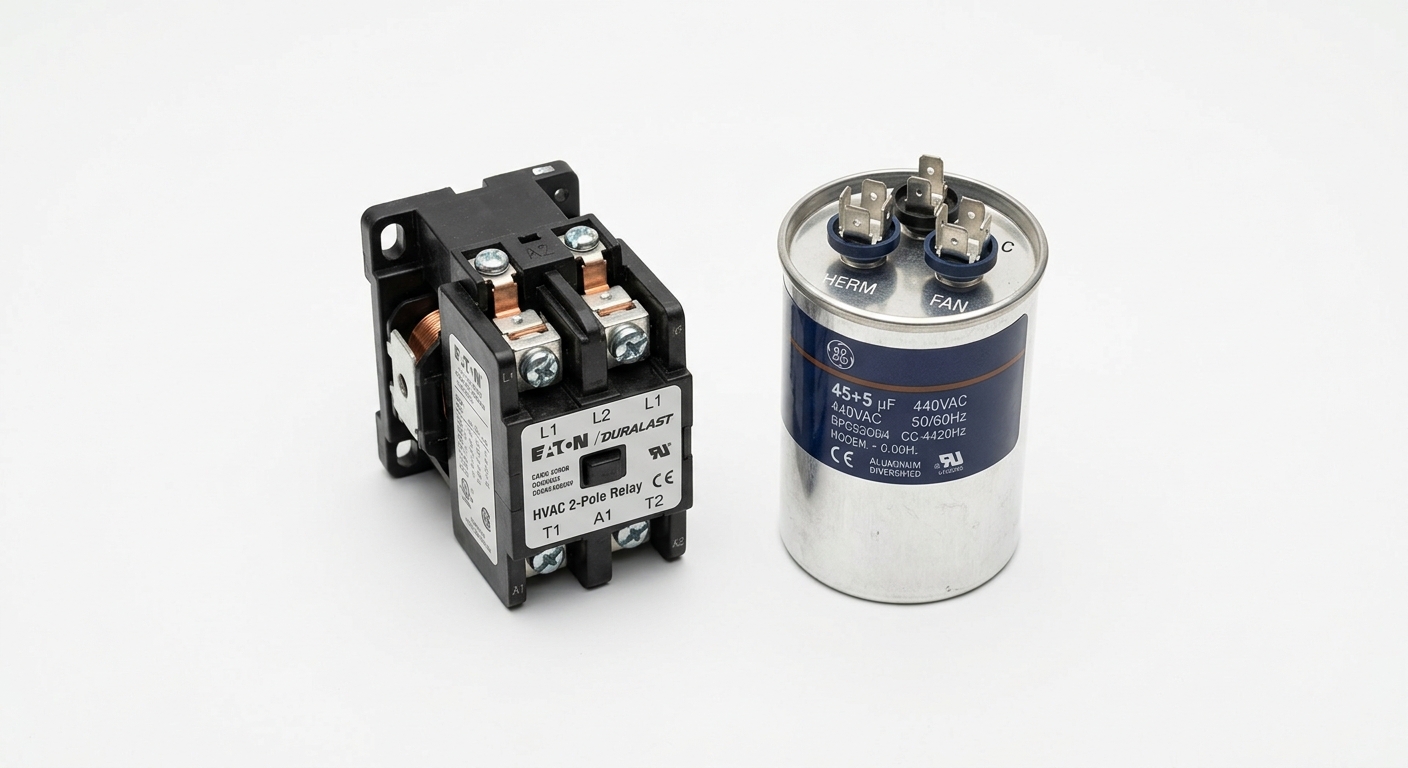
Clicking. Rapid clicking when the system starts usually indicates a failing relay or contactor. A single click is normal (the contactor engaging). Persistent clicking means the contactor is failing and should be replaced before it causes a system shutdown.
Banging or clanking. This is serious — it usually indicates a mechanical failure inside the compressor or blower motor. Turn the system off and call for service immediately.
Short Cycling
Short cycling is when your AC turns on, runs for a short time (5-10 minutes), then turns off, only to restart 15-30 minutes later. Instead of running full 15-20 minute cycles, it never gets a chance to properly cool and dehumidify your home.
Common causes:
- Oversized system — cools the space too quickly before removing humidity
- Dirty evaporator or condenser coil — reduces heat exchange efficiency
- Faulty thermostat — placed in a hot spot or malfunctioning
- Overheating compressor — thermal overload shuts the system down until it cools
- Low refrigerant — system reaches set temperature too quickly without proper dehumidification
Short cycling wastes energy, creates uneven temperatures, and accelerates wear on the compressor. It's a problem worth addressing promptly.
Water Leaks
Your AC produces significant amounts of condensate — a typical system in Tampa Bay can produce 5-15 gallons of water per day during peak humidity. When that water doesn't drain properly, it leaks.
Leak near the indoor unit. Usually a clogged condensate drain line. Tampa Bay's humidity and airborne particles make clogs common. Flush the line with white vinegar every 3 months during cooling season.
Leak from the outdoor unit. Condensate from the outdoor unit is normal — it's just melting ice on the coil in humid conditions. But a large or continuous stream of water from the outdoor unit during normal operation may indicate an issue.
Leak during or after a rainstorm. This is usually not your AC — it's likely a roof leak or window seal failure that coincides with AC operation. Check the location carefully before assuming it's the HVAC system.
If your condensate leak is significant or you notice water damage (staining, warping, musty smell), call a technician promptly. Condensate water damage can cause mold growth in wall cavities and ceiling spaces if left unchecked.