
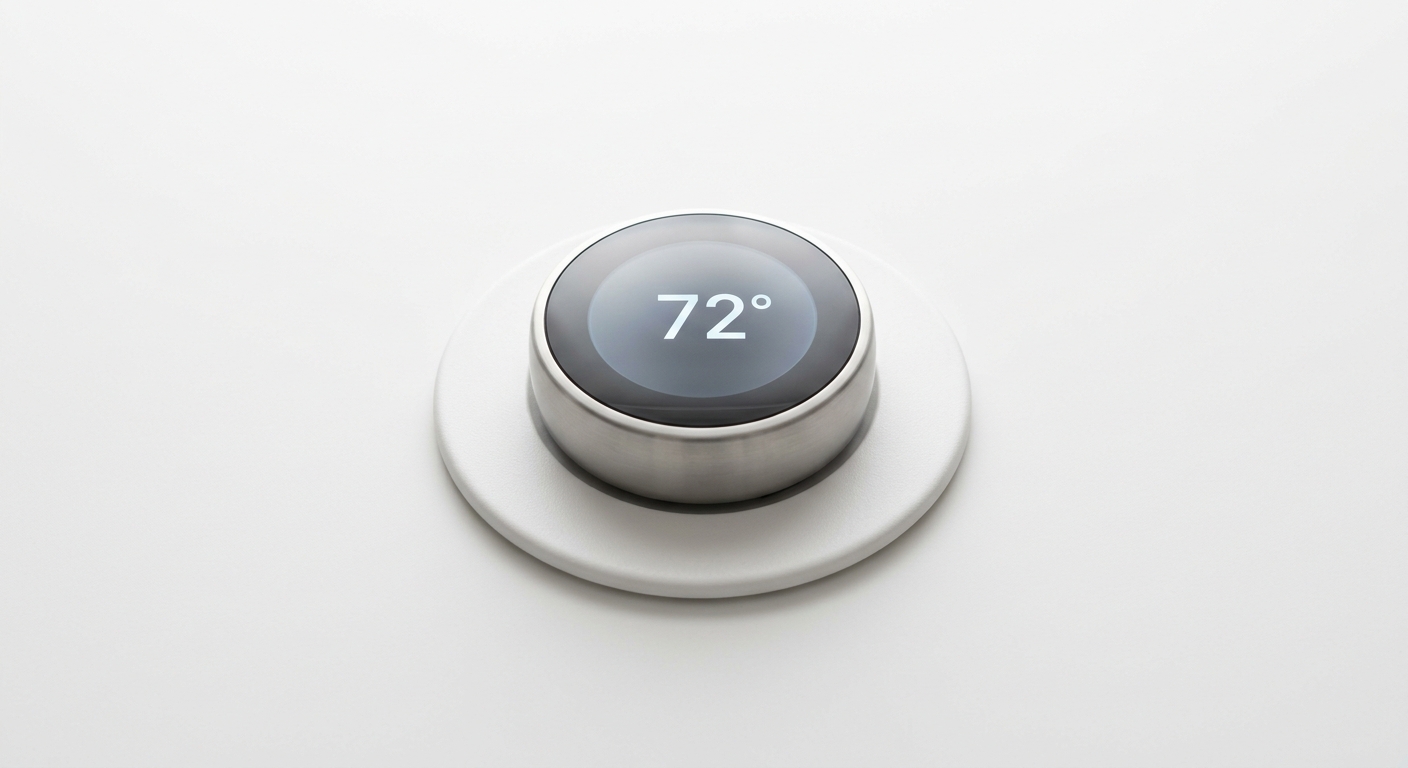
A thermostat is the only part of your HVAC system you interact with every day, and it has a bigger impact on your energy bill than any other single component. The right thermostat in Tampa Bay's climate can save $200-$400 per year; the wrong one can cost you the same amount.
Programmable vs. Smart: What's the Difference?
Programmable thermostats ($30-$80) let you set a schedule — different temperatures for different times of day. A basic 7-day programmable thermostat can reduce cooling costs by 10-15% simply by raising the setpoint when you're asleep or away.
Smart thermostats ($150-$300) add Wi-Fi connectivity, learning algorithms, remote control via smartphone, and energy reporting. The major brands:
- Nest (Google): Learns your schedule automatically. Best for people who don't want to program a schedule. The learning feature works well but takes 1-2 weeks to calibrate.
- ecobee: Includes remote room sensors that measure temperature in different rooms and average them. Best for homes with hot or cold spots. Works with Apple HomeKit, Alexa, and Google Assistant.
- Honeywell Home (Resideo): Reliable, less expensive, works with most smart home platforms. A solid middle-ground option.
Energy Savings in Tampa Bay's Climate
The savings opportunity in Tampa Bay is larger than in most markets because AC runs nearly 10 months per year. The math is simple: for every degree you raise the setpoint during cooling season, you save roughly 3-5% on cooling costs.
A smart thermostat that automatically raises the temperature 4°F when you're at work and 2°F when you're asleep can save 15-20% on annual cooling costs. In Tampa Bay, where annual cooling costs typically run $1,200-$2,000, that's $180-$400 per year — paying for a $200 thermostat in less than a year.
Zoning: When One Thermostat Isn't Enough
Most Tampa Bay homes have a single thermostat that controls the entire house. This works fine if your home is relatively uniform in size, insulation, and sun exposure. But if you have:
- A second floor that's always warmer than the first
- A large west-facing room that's hot in the afternoon
- A home office that needs cooling during the day while the rest of the house is empty
...then zoning may make sense. Zoning uses motorized dampers in the ductwork to direct airflow to different zones independently. A zoned system with two thermostats can keep the west-facing room comfortable without overcooling the rest of the house.
Retrofit zoning (adding dampers to existing ductwork) costs $1,500-$3,000 depending on the number of zones and duct accessibility. It's not cheap, but for homes with real temperature imbalances, it solves the problem without running a separate system.
Features Worth Paying For
- Remote sensors (ecobee). Measures temperature in problem rooms and averages with the main thermostat. Solves the "hot upstairs" problem.
- Geofencing. Uses your phone's location to detect when you're leaving and returning, adjusting the temperature automatically. More reliable than a fixed schedule for people with variable routines.
- Energy reports. Monthly summaries of runtime and estimated costs. Helps you understand when and why your system is working hardest.
- Alert maintenance reminders. Notifies you when it's time to change the filter or schedule a tune-up based on actual runtime, not a calendar.
Features That Are Nice But Not Essential
- Voice control. "Hey Google, set the temperature to 74" is convenient but doesn't save energy.
- Learning algorithms. Nice if you don't want to program a schedule, but a $40 programmable thermostat with a manually set schedule saves the same amount.
- Air quality monitoring. Some premium thermostats include VOC or humidity sensors. Useful for awareness but not a replacement for a dedicated air quality solution.
Compatibility Check
Before buying a smart thermostat, check compatibility with your system. Most smart thermostats require a "C wire" (common wire) for continuous power. If your existing thermostat wiring doesn't have a C wire, installation may require running a new wire or using an adapter ($20-$40). Some systems (heat pumps, multi-stage systems) need specific thermostat models — check the thermostat's compatibility checker before buying.